Country and language selection
Your country: South-Africa
Your language: English
Do you want to switch to your country version? Welcome to ZIEHL-ABEGG!
You are visiting our Website from Greece?

On the website for your region you will find information on the products relevant to you, contact details and news.

Unfortunately, there is no Greek language version of our website. However, you can stay on this page or contact our sales representative in Greece directly.

What does bionics mean?

Bionics (also known as biomimetics or biomimicry) is an interdisciplinary field of research that examines naturally occurring phenomena, structures and processes and translates them into creative engineering designs

Bionics is based on the assumption that natural organisms have developed efficient solutions to complex problems over the course of evolution and that these solutions can also be transferred to technical challenges. Bionics is therefore a process of abstracting and modifying findings and principles from biology for the world of technology.

The goal of bionics is efficiency. Like in biology, the aim is to achieve certain results in technical applications while also using the smallest possible amount of raw materials, energy and other resources. 

The portmanteau “bionics” was created by combining biology and electronics.

​ Maximum efficiency inspired by nature: Biomimetic axial and centrifugal fans from ZIEHL-ABEGG

Examples of bionics

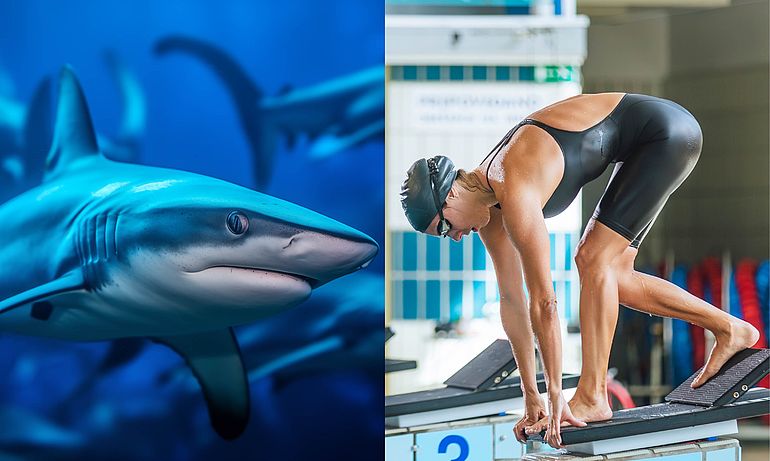
  • Shark skin (riblets) as an inspiration for topology design to reduce flow resistance
  • Termite hills as an inspiration for efficient ventilation systems for buildings to reduce energy costs 
  • Lotus leaves (lotus effect) as an inspiration for self-cleaning surfaces and coatings
  • Owl wings & whale fins as an inspiration for quiet fan blades, aircraft wings, etc.
  • Honeycombs as an inspiration for material-saving lightweight construction with a level of high stability
  • Gecko feet as an inspiration for adhesive materials that can be removed without leaving any residue
  • Burrs as an inspiration for hook-and-loop fastening mechanisms
  • Octopus tentacles as an inspiration for suction cups
  • Antlion’s mandibles as an inspiration for pliers
  • Bat echolocation as an inspiration for ultrasound applications
  • etc.

 ​The world's only biomimetic blade concept: FE3owlet from ZIEHL-ABEGG

Branches of bionics

In bionics, a distinction is made between different branches in which different aspects of biological principles are examined. Examples:

  • Bionic design examines how individual elements work and interact in their overall design
  • Bionic movement or behaviour examines the behaviour and coordination of living creatures (e.g. in swarms of birds or fish) to develop algorithms for control systems
  • Neurobionics uses findings from neurobiology and cognitive science to apply principles of thinking, learning and decision-making to the development of machine learning or computer systems
  • Climate bionics examines natural systems for passive ventilation, cooling or heating
  • Anthropobionics, or biomechanics, researches the physiological processes of living creatures for use in robotics, for example

Advantages of bionics

Depending on the area of application, solutions inspired by bionics offer incredible potential for technical problems:

  • Increased efficiency: Through the abstraction of biological structures and processes, technical products and systems can be designed and operated more efficiently. This can lead to significant savings in energy, material or other scarce resources. 
  • Sustainability: Bionics contribute to the sustainable conservation of raw materials and the reduction of waste by increasing efficiency in production and operation through the use of natural principles.
  • Innovation: In many ways, bionics provide inspiration for technical solutions that are now indispensable in everyday life, e.g. tools, means of transport, medical devices and instruments, etc.

Bionics demonstrated in practice: Fan

Basing system components on biological structures, such as sickle-shaped and fluted blade and vane designs, winglets, ripppled leading edges and serrated trailing edges allows for optimised flow and reduced vortex formation and turbulence. This improves the fan's aerodynamic efficiency, allowing for increased air flow performance with lower energy consumption and lower sound emissions.

The integration of additional components such as honeycomb-shaped inlet and outlet guide grilles, facilitates further optimisation of flow guidance and a reduction of vortex formation at the fan's inlet and outlet points. This further increases the overall efficiency of the system and also minimises noise development. At the same time, the lightweight construction contributes to resource conservation without compromising on stability.

 ​Biomimetic blade design – extremely efficient, super quiet: ZAbluefin from ZIEHL-ABEGG

Twisted blade with fluted surface and serrated trailing edge

Fluted leading edge with wave-shaped protrusions

Honeycomb-shaped inlet guide grille

Application areas of bionics

The potential uses for bionics and bionically developed products are as numerous as they are diverse. 

Examples:

  • Building ventilation: Axial fans, centrifugal fans
  • All areas of ventilation technology or flow mechanics, aerodynamics and hydrodynamics
  • Medical technology
  • Aerospace industry
  • Robotics & automation
  • IT and artificial intelligence
  • Architecture & construction
  • Renewable energy design (e.g. wind turbines)
  • Developments in the field of sensor technology
  • And many more

 FE2owlet with sickle-shaped blade edging, fluting, winglet and serrated trailing edge

Was this page helpful?