Country and language selection
Your country: Korea
Your language: English
Do you want to switch to your country version? Welcome to ZIEHL-ABEGG!
You are visiting our Website from Greece?

On the website for your region you will find information on the products relevant to you, contact details and news.

Unfortunately, there is no Greek language version of our website. However, you can stay on this page or contact our sales representative in Greece directly.

Definition of pressure

In physics, pressure generally refers to the quotient of a force acting perpendicular to a surface. This results in the general pressure formula p = F / A

Types of pressure in ventilation technology
In relation to ventilation systems, a distinction is made between different types of pressure:

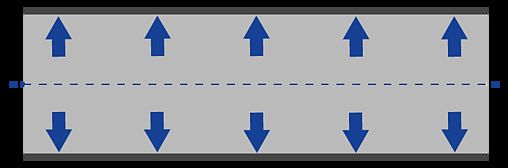
  • Static pressure refers to the pressure that a gaseous medium (e.g., air) exerts perpendicular to the direction of flow on the walls of the surrounding air duct.
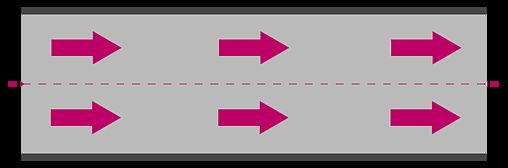
  • Dynamic pressure describes a type of kinetic energy, i.e., that of the flowing medium due to its movement. Thus, dynamic pressure usually acts in the direction of flow, parallel to the walls of the surrounding air duct.
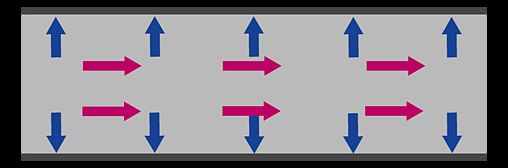
  • Total pressure is the sum of all static pressures and dynamic pressure.

The pressures in ventilation systems can be positive on the pressure side or negative on the suction side of the fan. The delta Δp of the pressures at two measuring points is generally referred to as the differential pressure or pressure difference. 

The right pressure for every application: ZIEHL-ABEGG fans impress with top performance!

Pressure unit

The unit commonly used for pressure in ventilation technology is the pascal (Pa). It describes the force in newtons (N) acting perpendicularly on an area of m2. Accordingly, a pressure of 1 Pa results from a force of 1 newton acting on an area of 1 m2: [p] = N/m2 = Pa.

An internationally used representation of pressure increase in design programs for ventilation systems is static pressure in pounds per square foot (PSF).

In other areas, other pressure units are used in addition to pascals, such as:

  • The Bar (1 bar = 100.000 Pa)
  • The physical atmosphere (1 atm = 101.325 Pa)
  • The Pound-force per square inch (1 psi = 6.894,76 Pa)
  • The Inches of water gauge (1 inH2O = 248,8 Pa)
  • etc.

Calculate pressure

There are various pressure formulas that can be used to calculate pressure (examples):

Static pressure ps as the quotient of a vertically acting force F on an area A:
 ps = F / A

Dynamic pressure pd is calculated from the gas density ρ (rho) and the velocity c:
 pd = ρ / 2c2

The sum of all static and dynamic pressures in a system forms the total pressurept (= total pressure, system pressure):
 pt = ps + pd

If the medium to be transported is a gas or gas mixture other than air, the product of the amount of substance n, the gas constant R, and the temperature T is divided by the volume V:
 p = n * R * T / V

Alternatively, the pressure can be calculated from the gas density ρ, the gas constant R, and the temperature T:
 p = ρ / R * T

Dependencies of air density

The pressure dependence of density in the event of pressure differences is very low in ventilation technology compared to atmospheric pressure and can be neglected. In this respect, air is assumed to be an incompressible medium (non-compressible) for the design of ventilation systems.

The temperature dependence of density, on the other hand, must be taken into account!

Altitude formula

If a ventilation system is operated far above sea level, the air density must be calculated and taken into account in this application. To calculate the pressure pH, the internationally recognized altitude formula (at a temperature of 0°C) is applied with the air pressure pa at sea level and the geodetic altitude Ha (represented with Euler's number e as a constant):
 pH = pa * e-Ha/7990

Bernoulli's formula & Bernoulli effect

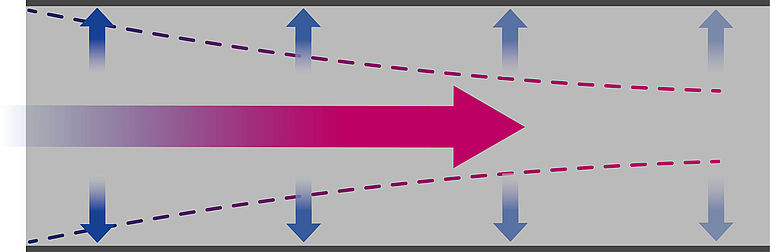
Bernoulli's formula states that the total pressure of an ideal flow, i.e., the sum of all static and dynamic pressures within a system, is constant at every point along the flow line.

This assumption gives rise to Bernoulli's formula:
 ρ / 2c2 + ps = constant

In a practical application, such as air flow through an air duct, Bernoulli's formula implies that static pressure decreases as flow velocity increases. This so-called Bernoulli effect is particularly relevant in the planning and design of ventilation systems.

Pressure increase & pressure loss

In order to optimally fulfill its specific purpose, a fan or ventilation system must set air or other gaseous media in motion. This acceleration causes the system to increase the pressure. In order to achieve the pressure increase required for the application, the system must be considered as a whole, including all components (e.g., impeller, drive, air ducts, filters, etc.), and designed according to the requirements.

In real flow conditions, pressure losses occur which must be overcome by the fan. These are caused, for example, by (surface) friction, shape resistance (round or square air duct), obstacles in the air duct (e.g., filters), deflections/branches or cross-sectional changes in the air duct, stuck contaminants, or other factors. The higher the total pressure losses of a system, the more energy must be expended by the fan to generate the required volume flow.

To ensure that the system operates as efficiently as possible, all pressure losses must be taken into account during the configuration or design of the system and kept to a minimum. The design point should be close to the actual operating point of the system. This allows for a very precise selection of the impeller-drive combination and dimensioning of the system during the planning phase.

 Fans and drives from ZIEHL-ABEGG stand for maximum efficiency and optimum performance in every application

Pressure-volume flow correlation

When designing ventilation systems, the pressure (system pressure) must be adjusted to the specific requirements of the application in relation to the volume flow. Precise adjustment of the performance parameters, taking into account the installation conditions (e.g., length and cross-section of the air duct, installation dimensions, etc.), enables the most efficient combination of impeller, motor technology, and other system components. The sum of all pressure losses in the system as a function of the volume flow is shown graphically in the system characteristic curve.

  • Pressure: The system pressure of an air handling system is crucial for its ability to convey air through the system and overcome obstacles such as filters, air ducts, throttle valves, and air outlets. Complex systems, such as clean room ceilings or extraction systems with long duct systems and multiple filters, require higher pressures than simpler systems, such as free-hanging fans for livestock barn ventilation.

    When designing a system, the following applies: Centrifugal fans are particularly suitable for applications that require high pressures at low volume flows.
     

  • Volume flow: Based on the specific application requirements (e.g., room size, necessary air exchange rate, or special process requirements), a system must convey a certain amount of air or other gaseous media in order to perform its function optimally.

    When designing a system, the following applies: Axial fans are particularly suitable for applications that require high volume flows at comparatively low pressures.

Grafischer Vergleich von Volumenstrom-Druck-Korrelation mit beispielhaften Kennlinien eines Axialventilators und eines Radialventilators

System characteristic curve
(Example illustration)

Characteristic curve of centrifugal fan
(Example illustration)

Characteristic curve of axial fan
(Example illustration)

Practical example

The higher the pressure loss (e.g., due to flow obstructions in the air duct, friction, or form resistance) in a system, the more energy is required by the fan to ensure the desired air delivery rate. From the user's point of view, it is therefore crucial to keep the pressure loss as low as possible for efficient operation.
Structural optimizations, such as the use of larger heat exchangers, shorter air ducts, or a larger pipe cross-section, can significantly reduce pressure loss. Although this increases the space requirements and, in some cases, the construction costs of the system, the system can be operated with significantly lower energy consumption. In addition, this leads to a reduced noise level. An optimized system configuration thus reduces operating costs over the entire service life of the system and usually leads to higher overall savings for the user.

Conclusion: In order to achieve the most efficient operation, optimal acoustics, and the highest cost-effectiveness of a system over its entire service life, numerous factors must be taken into account. Often, the best compromise between the given conditions and the ideal system design must be found from the user's point of view.

ZIEHL-ABEGG will be happy to assist you in designing your system for optimum performance. Contact us!

Was this page helpful?